Importing from Côte d’Ivoire involves a sequence of decisions that must be planned carefully. Understanding each stage helps reduce risks and keeps the operation organized from the first supplier contact through to the arrival of the goods.
The first stage is supplier selection. It is important to identify reliable partners and assess product quality and the commercial conditions being offered.
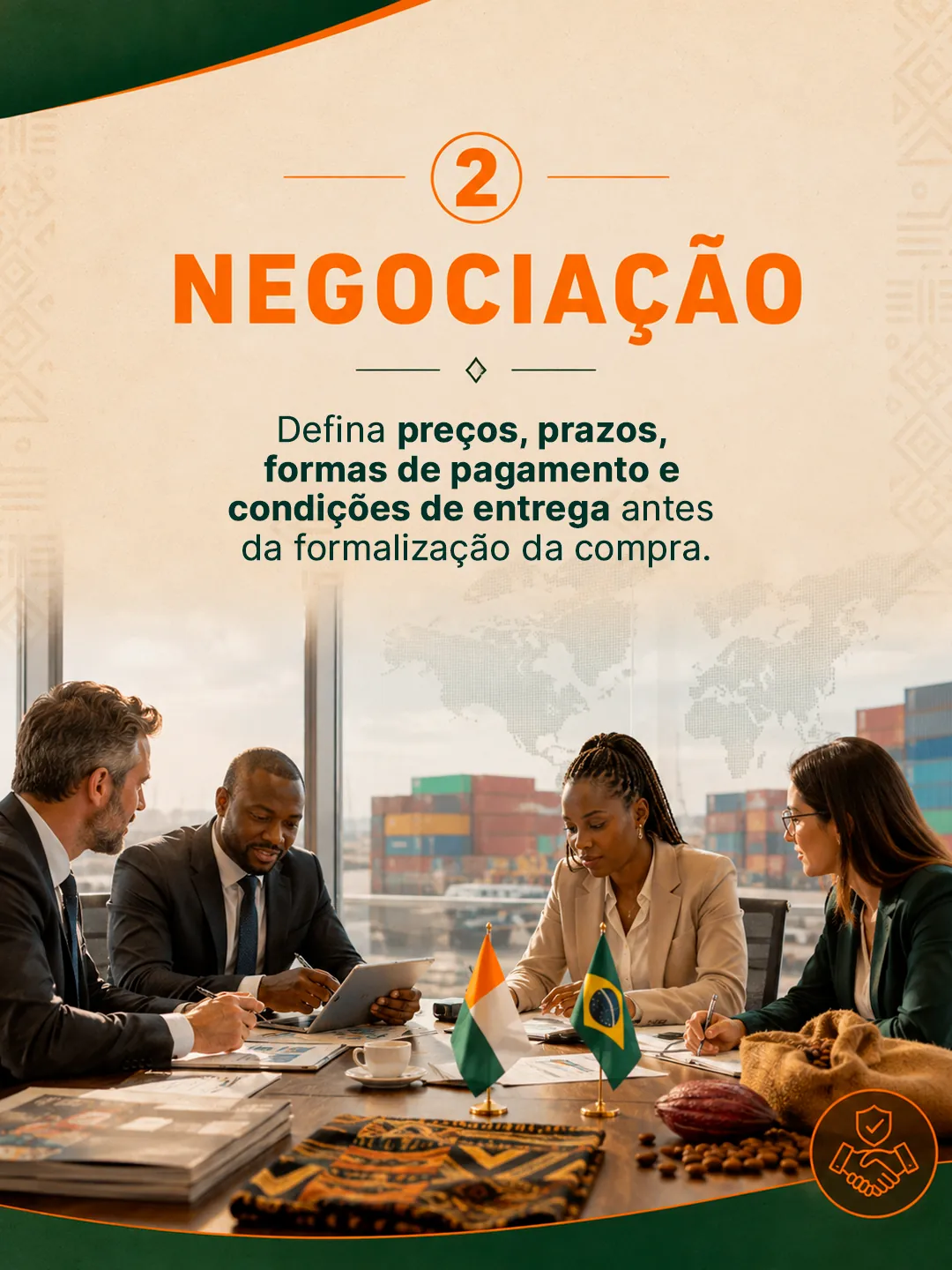
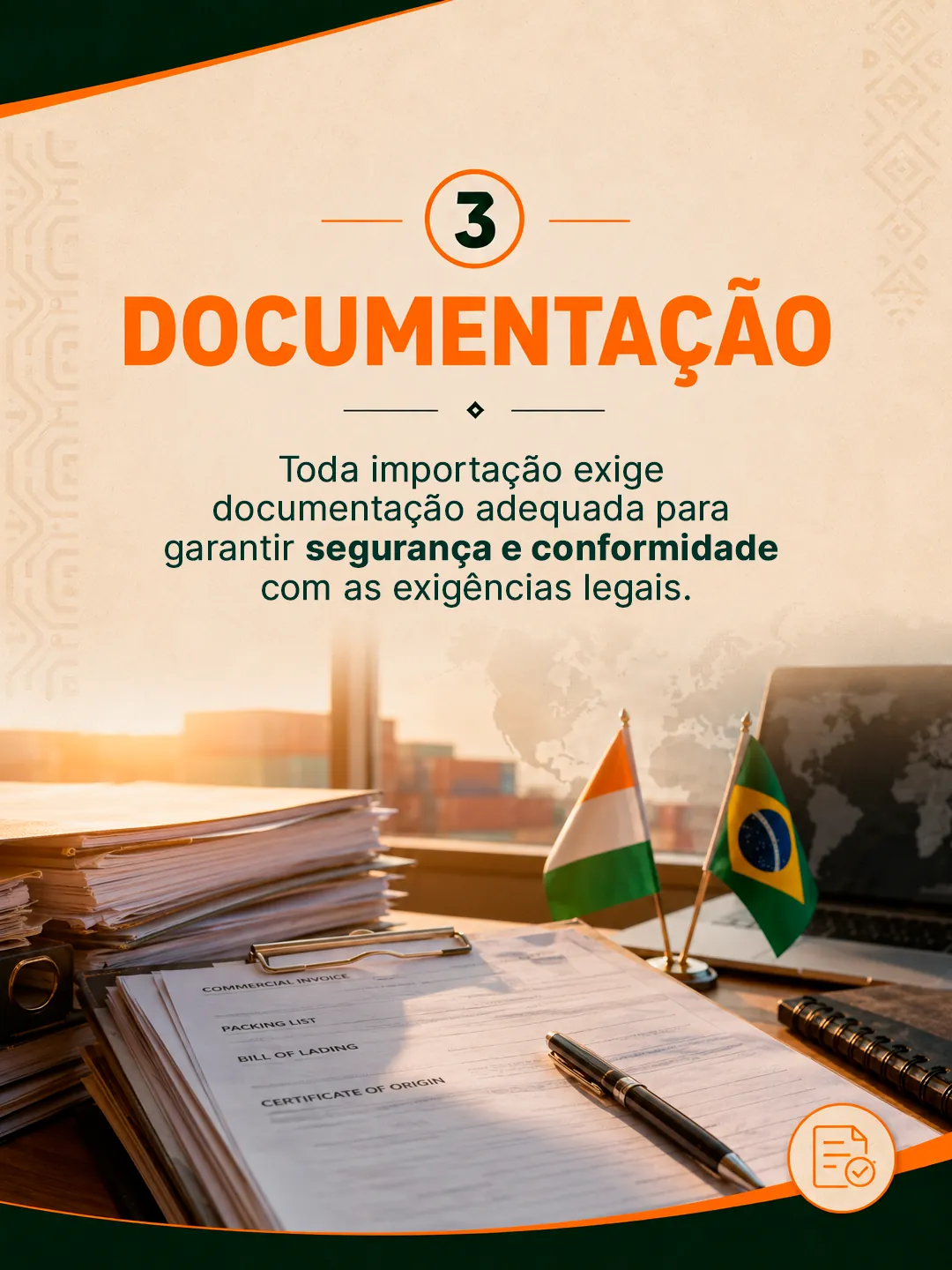
Next comes negotiation, when prices, deadlines, payment methods and delivery conditions are defined. Documentation must also comply with the legal requirements of the operation.
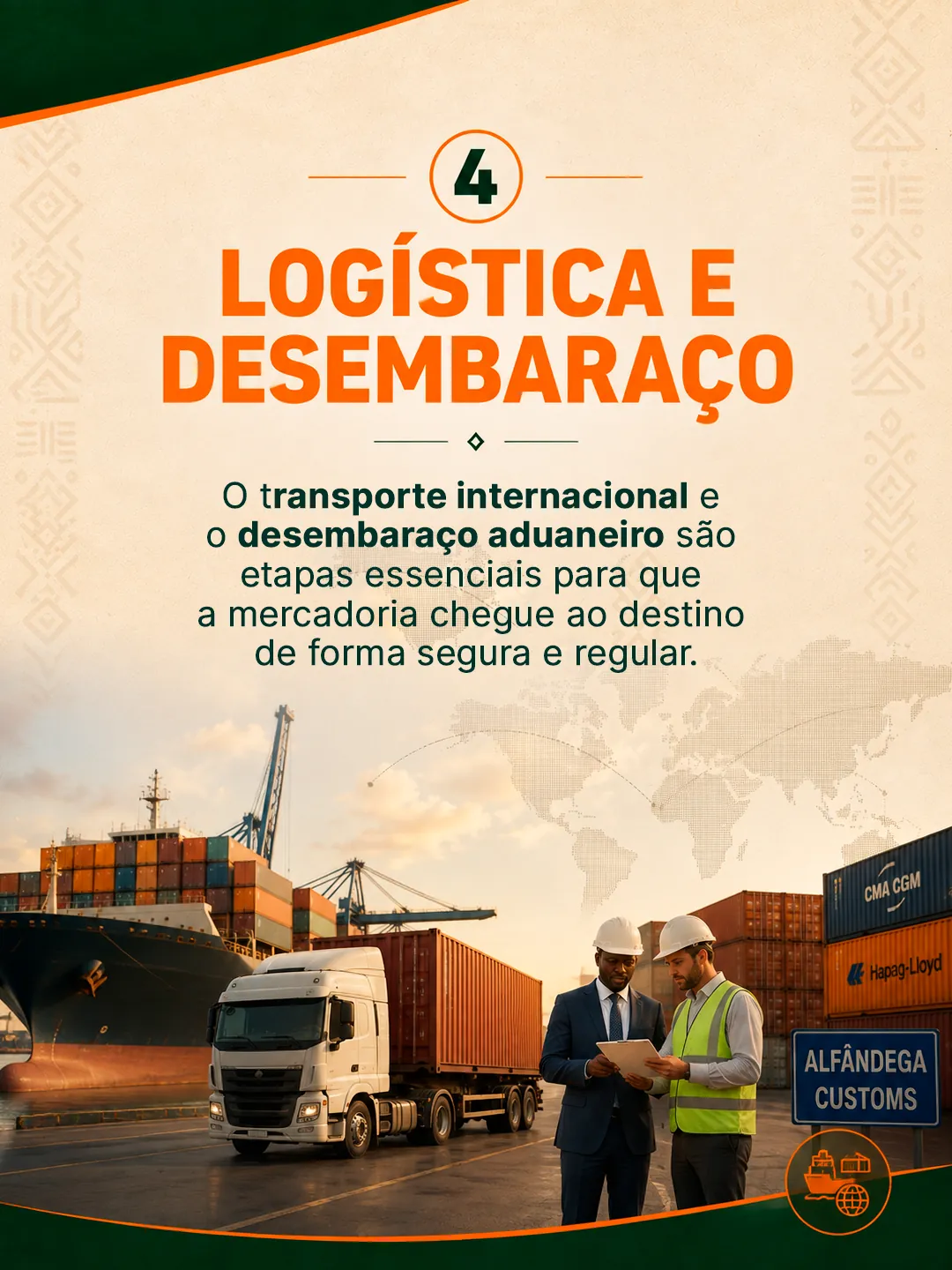
Finally, logistics and customs clearance organize international transport and the necessary customs procedures. Information and planning are the foundation for turning commercial possibilities between Brazil and Côte d’Ivoire into safer operations.
A secure operation depends on sequence and verification
The carousel presents importing as a journey, and that logic matters because a poorly managed step often affects everything that follows. Supplier selection should include verification of information and delivery capacity. Negotiation should then clearly record the product, quantity, price, deadline, payment method and each party’s responsibilities.
Documentation requires early confirmation of the records and evidence needed for the operation. Logistics should be chosen according to the characteristics of the cargo, available time and total cost, while customs clearance needs to be considered from the planning stage rather than only after goods are already in transit.
For companies just getting started, working with specialized professionals and maintaining a checklist reduces the risk of improvised decisions. Importing between Côte d’Ivoire and Brazil can open useful opportunities, but it should be treated as a structured process rather than an isolated purchase. Preparation, documentation and appropriate partners are all part of building a consistent commercial operation.
View the visual content