
Brazil and Côte d’Ivoire are connected by commercial possibilities that cross the Atlantic. To turn an opportunity into an operation, international logistics must be understood as a central part of planning.
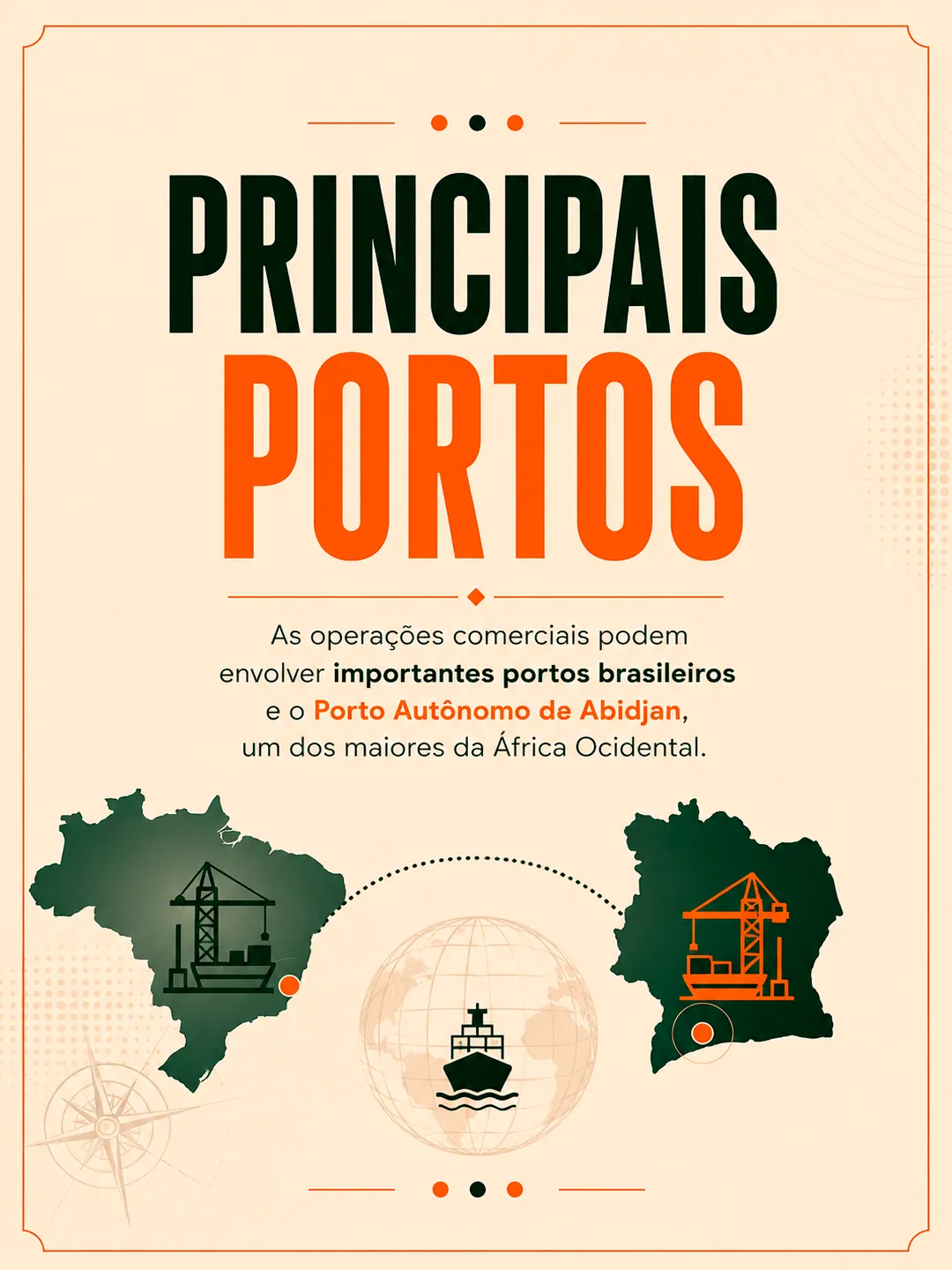
Operations may involve major Brazilian ports and the Autonomous Port of Abidjan, presented as one of West Africa’s major cargo hubs.
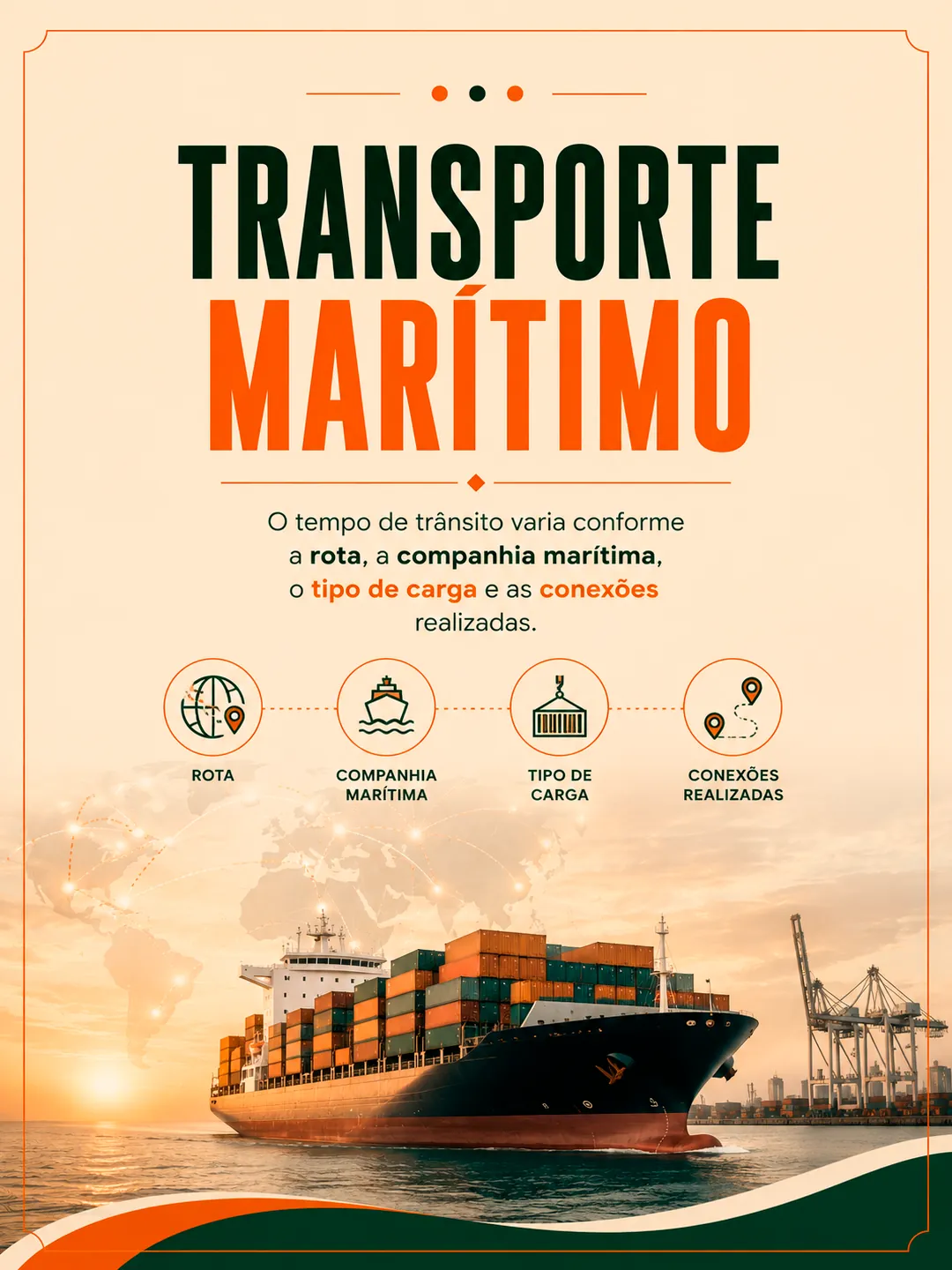
In maritime transport, transit time varies according to route, shipping line, type of cargo and connections. This reinforces the importance of planning and accurate information for each shipment.
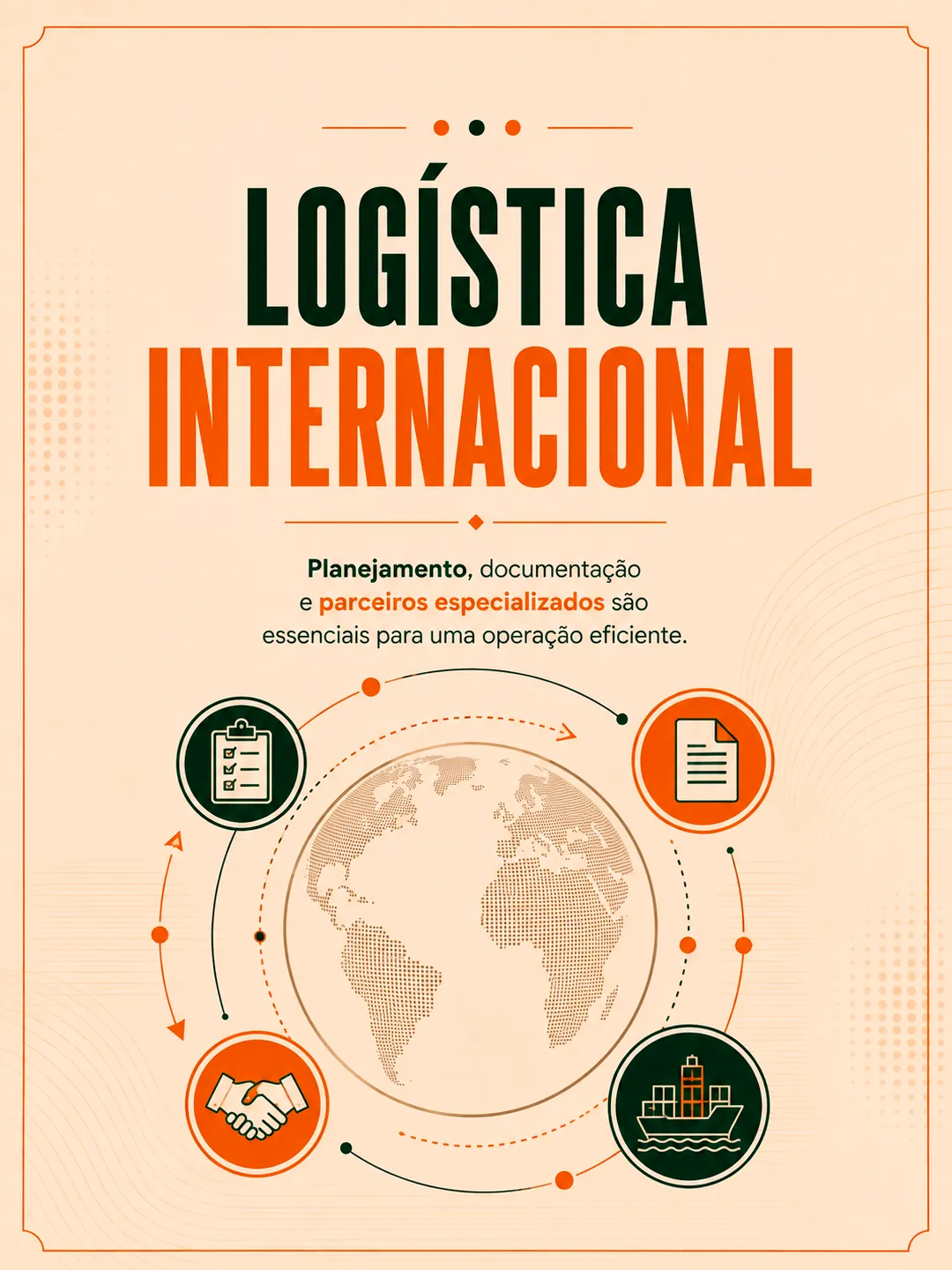
Documentation and specialist partners complete this structure. When logistics, information and relationships work together, Brazil and Côte d’Ivoire become closer as markets and commercial partners.
Logistics turns distance into planning
The visuals present the connection between Brazil and Côte d’Ivoire through the elements that make trade possible: ports, maritime transport, documentation and specialized partners. This perspective matters because geographical distance is not, by itself, the main challenge. What makes the difference is the ability to coordinate stages, deadlines and responsibilities.
The Autonomous Port of Abidjan appears as a reference on the Ivorian side. On the Brazilian side, the port of origin depends on the operation. Maritime routes may include stops and connections, and transit time should be confirmed according to the shipping company, frequency, cargo type and commercial conditions. Inventory planning and safety margins therefore matter.
Documentation needs to accompany the operation from the beginning. Working with agents, customs professionals, logistics operators and other specialists helps organize responsibilities and anticipate requirements. The message is that Brazil and Côte d’Ivoire can become commercially closer when information, partners and planning move together.
View the visual content